Airline Career Pilot Program Training TimelineFull-Time Training by Starting Point
With ATP's total immersion pilot training, you will complete the Airline Career Pilot Program with all the certification you need for employment as a professional pilot in as little as nine months starting from zero time. Match the timeline below to your experience level by comparing starting points, confirm prerequisites before class, and see fixed tuition and payment schedules for your path.
After graduating, work as a flight instructor to build experience, then choose from one of ATP's 38 Career Tracks™ for structured career progression to your desired airline. See graduate placements for recent airline hiring results.
Many factors such as local weather, winter conditions, examiner availability, as well as your dedication, availability, and ability to absorb information quickly can affect your training timeline and can lengthen the duration of your program. While ATP does not guarantee program completion time, our nationwide network of resources, training centers, aircraft and examiners works to lessen the impact of delays.
Choose Your Starting Point
Start from Zero Time — Training Timeline
Discover what it's like to train with ATP by scheduling your first no-obligation training flight today!
Your First Flight with ATP No-Obligation or Experience Required
Your Introductory Flight is a great way to get a taste of what a typical flight lesson at ATP entails, with an introduction to the fundamentals of flight and airline-oriented instruction. During your flight, our instructor will guide you through each maneuver, allowing you to take the controls and feel the excitement of flying.
Qualify for a FREE Introductory Flight (valued at $225) when you apply for a loan and you are qualified by an Admissions Representative. There's no obligation to start training with ATP if your loan application is approved or to take advantage of your free Introductory Flight offer. Apply Today »
Protected by ATP Advantage Guarantee
The first step towards becoming an airline pilot is earning your Private Pilot Certificate.
Private Pilot
The first step towards becoming a commercial pilot is earning your single-engine Private Pilot Certificate. Keeping your end goal in mind — ATP's philosophy is to deliver airline-style training and flight experience at the very onset of a pilot's training career. This is accomplished through standardized operating procedures and training students to a high level of proficiency. In your primary training stage, you'll learn the fundamentals of flight and accomplish your first solo.
- Two-Week, Full-Time ATP Elevate Private Pilot Ground School
- Private Pilot Online Training Resources
- Single-Engine Flight Instruction & Briefings
- Single-Engine Solo Flights
Private Pilot (with single-engine privileges)
Requires up to 7 days per week, must be flexible
During the first two weeks of training, you'll attend ATP Elevate Ground School sessions, five days per week, and complete 35 hours of private pilot ground school.
For the remainder of your training, and as directed by your flight instructor and the program outline, each day you will participate in guided independent study (online modules, reading, research, "chair flying", etc.), group study (with students in similar stages of training), and/or flight lessons with related briefings. In addition, some days include simulator lessons, individual ground lessons and/or group ground lessons.
Learn more about a typical flight training day »
Learn more about required availability »
Some Time Away from Primary Training Center May Be Required
To keep your training on time, the single-engine private pilot checkride may be scheduled at a location other than your primary training center. In such cases, travel will be required and ATP will coordinate transportation and housing as necessary.
Add an instrument rating to your private pilot certificate, which will allow you to fly in all kinds of weather.
Instrument Rating
Airlines conduct flights under Instrument Flight Rules (IFR), allowing them to fly in less than ideal weather conditions. Accordingly, these pilots must have an Instrument Rating. During this stage, students conduct flights under simulated instrument conditions and learn IFR procedures such as approaches, holds, arrival and departure procedures, and emergency operations.
Not unlike other stages of the program, students are trained using standard operating procedures, flows, and callouts. This practice not only increases safety and consistency, but will prepare students for flying in the airline environment.
- Two-Week, Full-Time ATP Elevate Instrument Ground School
- Instrument Online Training Resources
- Instrument Single-Engine Flight Instruction & Briefings
- Scenario-Based Simulator Training
- Crew Procedures & LOFT Simulator Training
Instrument Rating
Requires up to 7 days per week, must be flexible
During the first two weeks of training, you'll attend ATP Elevate Ground School sessions, five days per week, and complete 35 hours of instrument ground school.
For the remainder of your training, and as directed by your flight instructor and the program outline, each day you will participate in guided independent study (online modules, reading, research, "chair flying", etc.), group study (with students in similar stages of training), and/or flight lessons with related briefings. In addition, some days include simulator lessons, individual ground lessons and/or group ground lessons.
Learn more about a typical flight training day and required availability.
Some Time Away from Primary Training Center May Be Required
To keep your training on time, the instrument rating checkride may be scheduled at a location other than your primary training center. In such cases, travel will be required and ATP will coordinate transportation and housing as necessary.

$5,000 Tuition Reimbursement — Earn $5,000 at this stage of your flight training through the Horizon Pilot Development Program.
Earn your single-engine Commercial Pilot Certificate and get paid to fly.
Commercial Pilot
During this stage, students will begin preparing for their single-engine Commercial Pilot Certificate, eventually allowing them to be paid to fly. As a commercial pilot, new flight maneuvers are introduced and existing ones are held to tighter tolerances. Prior to completing the commercial pilot practical test, 20-plus hours of airline-style Line-Oriented Flight Training will have been conducted either at your primary training center or at another location.
- Commercial Online Training Resources
- Commercial Single-Engine Flight Instruction & Briefings
Commercial Pilot (with single-engine privileges)
Requires up to 7 days per week, must be flexible
As directed by your flight instructor and the program outline, each day you will participate in guided independent study (online modules, reading, research, "chair flying", etc.), group study (with students in similar stages of training), and/or flight lessons with related briefings. In addition, some days include simulator lessons, individual ground lessons and/or group ground lessons.
Learn more about a typical flight training day and required availability.
Some Time Away from Primary Training Center May Be Required
To keep your training on time, the commercial pilot checkride may be scheduled at a location other than your primary training center. In such cases, travel will be required and ATP will coordinate transportation and housing as necessary. Additionally, if no previous training was conducted in Technologically Advanced Aircraft, you may be required to travel to another training center for up to two weeks to accomplish this training.
Earn your CFI and CFII certificates — the best way to gain experience and meet airline minimums.
Flight Instructor Certificate (CFI & CFII)
One month of the program is devoted to developing students into Certificated Flight Instructors (CFI). During the flight instructor stage students learn the fundamentals of instruction and hone their ability to effectively teach and communicate the knowledge and experience they have attained throughout the program.
Becoming a CFI allows you to begin earning an income in your new career while you gain the flight experience needed to meet airline minimums.

Nationally Awarded & Recognized Instructors
ATP Flight School instructors set the industry standard for professional airline-oriented flight training. The quality and professionalism of ATP instructors have been consistently recognized by AOPA and the National Association of Flight Instructors.
- Two-Week ATP Elevate CFI Ground School
- CFI Online Training Resources
- Single-Engine CFI Flight Instruction & Briefings
- Instrument CFI Flight Instruction & Briefings
Flight Instructor (with single-engine and instrument privileges)
Requires up to 7 days per week, must be flexible
The first two weeks of the flight instructor stage consists of instructor-led remote ATP Elevate Ground School, requiring full time virtual participation from your home.
As directed by your flight instructor and the program outline, each day you will participate in guided independent study (online modules, reading, research, "chair flying", etc.), group study (with students in similar stages of training), and/or flight lessons with related briefings. In addition, some days include simulator lessons, individual ground lessons and/or group ground lessons.
Learn more about a typical flight training day and required availability.
Up to Five Weeks from Primary Training Center Required
Depending on where you choose to train, you may be required to travel to another location. In such cases, travel will be required and ATP will coordinate transportation and housing as necessary.
Add multi-engine ratings to your existing certificates, allowing you to operate faster, larger aircraft.
Multi-Engine Add-Ons
Begin flying the Piper Seminole to add multi-engine privileges to your certificate. While the principles of flight remain the same, learning to fly the multi-engine Seminole will involve new concepts such as multi-engine aerodynamics, emergency operations, and more complex systems. This stage of the program also includes the flight time necessary to ensure that you'll meet Airline Transport Pilot certificate requirements later in your career and be eligible for airline pilot employment.
- Multi-Engine Online Training Resources
Includes the flight time necessary to ensure that you'll meet Airline Transport Pilot certificate requirements later in your career and be eligible for airline pilot employment.
- Commercial Pilot Multi-Engine Privileges
Requires up to 7 days per week, must be flexible
As directed by your flight instructor and the program outline, each day you will participate in guided independent study (online modules, reading, research, "chair flying", etc.), group study (with students in similar stages of training), and/or flight lessons with related briefings. In addition, some days include simulator lessons, individual ground lessons and/or group ground lessons.
Learn more about a typical flight training day and required availability.
Up to Three Weeks from Primary Training Center Required
Depending on where you choose to train, you may be required to travel to a Piper Seminole location. In such cases, travel will be required and ATP will coordinate transportation and housing as necessary.
$7,500 Tuition Reimbursement — Earn $7,500 at this stage of your flight training through the Horizon Pilot Development Program.
Gain flight time and experience by flying as a flight instructor with ATP.
ATP Flight Instructor Job
ATP is hiring Airline Career Program graduates for CFI jobs! Work towards the minimum airline hiring requirement of 1,500 hours as a certificated flight instructor (CFI) with ATP. As an ATP flight instructor, you will:
- Get Paid to Fly — Earn flight, ground and simulator fees, plus bonuses.
- Gain Experience Fast — ATP students flew over 600,000 hours the last year.
- Tuition Reimbursement — Through ATP's Exclusive Airline-Backed Career Tracks™.
- Career Development — Qualify to participate in A320 and B737 Direct Programs with Frontier, Avelo, and Sun Country.
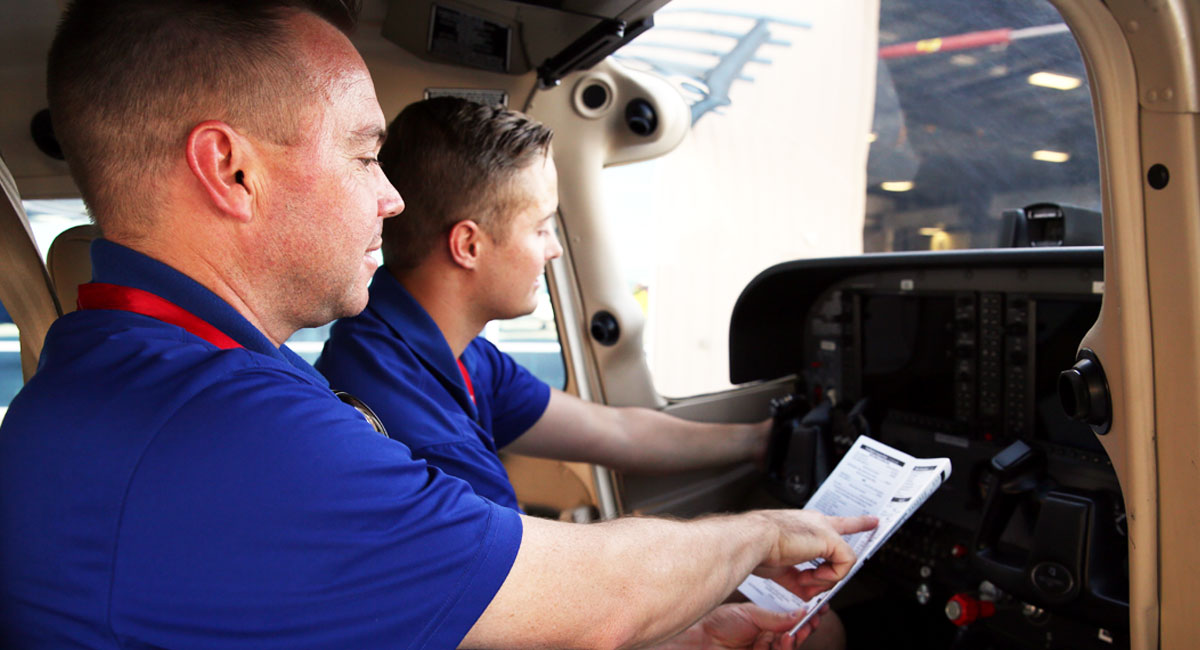
Whether you want to fly for American, Delta, United, or a low-cost carrier, ATP has a Career Track™ to get you there.
Choose Your Career Track™ Structured Progression to the Flight Deck
ATP's Career Tracks™ are airline-backed programs that give you a competitive edge with exclusive benefits and a structured career progression to your airline of choice. Whether your goal is to fly for American, Delta, or United, ATP is the only school with formal agreements with all three, as well as many low-cost carriers.
Long before this point, you'll work with ATP's Career Services team to match you with the best Career Track™ for your end goal. They'll curate a plan tailored to your aspirations and help you navigate the different entry points and requirements. One of the things you'll decide is whether you want to join a major airline program, a regional airline cadet program, an Airbus or Boeing direct program, or a cargo or corporate operator program.



ATP is the only flight school that provides you with Career Tracks™ to all three major airlines—American, Delta, and United. Entry into these programs can be competitive, and you'll either join before, during, or after your flight training. The typical progression is to gain flight experience as an ATP instructor, then fly as an airline pilot for an affiliated regional airline before moving on to your major airline. Explore each airline to learn about these unique Career Tracks™.
A common path to the major airlines is through regional airline cadet programs. These programs provide a structured career progression from flight training to a regional airline, along with mentorship, support, and exclusive benefits while flying as a flight instructor. After flying for the regional airline and gaining experience as an airline pilot, you will eventually transition to the major airline it is affiliated with. Regional airlines almost exclusively hire from their cadet programs, and at ATP, you'll have access to all of them, giving you the competitive edge.


ATP's Airbus and Boeing Direct Programs with Frontier, Avelo, and Sun Country allow you to go from flight instructor straight to the Airbus or Boeing flight deck without flying as a regional airline pilot first. These Career Tracks™ provide an accelerated transition to help you establish your career as an airline pilot.
If your goal is to fly for a cargo or corporate operator, ATP has multiple Career Tracks™ to help progress your career and give you the competitive edge, some even with reduced hiring minimums.
Your turn to join the thousands of ATP graduates getting hired.
Airline Placement
ATP is your complete airline career solution, taking you from zero experience to airline pilot job. After gaining 1,500 hours of flight time, you'll be ready to move on to the airlines through one of ATP's airline-backed Career Tracks™. Join the thousands of ATP graduates getting hired and write your own story of success in a career like no other.
Ongoing Career Support
ATP's Career Services team will continue to support you after you graduate with job placement, interview scheduling, resume review, and career guidance.
Ongoing career support and mentorship are also provided through the no-fee ATP Alumni Association, giving you the opportunity to attend exclusive alumni events and take advantage of exclusive discounts for resume and interview preparation services.
Credit for Solo — Training Timeline
Discover what it's like to train with ATP by scheduling your first no-obligation training flight today!
Your First Flight with ATP No-Obligation or Experience Required
Your Introductory Flight is a great way to get a taste of what a typical flight lesson at ATP entails, with an introduction to the fundamentals of flight and airline-oriented instruction. During your flight, our instructor will guide you through each maneuver, allowing you to take the controls and feel the excitement of flying.
Qualify for a FREE Introductory Flight (valued at $225) when you apply for a loan and you are qualified by an Admissions Representative. There's no obligation to start training with ATP if your loan application is approved or to take advantage of your free Introductory Flight offer. Apply Today »
Protected by ATP Advantage Guarantee
The first step towards becoming an airline pilot is earning your Private Pilot Certificate.
Private Pilot
The first step towards becoming a commercial pilot is earning your single-engine Private Pilot Certificate. Keeping your end goal in mind — ATP's philosophy is to deliver airline-style training and flight experience at the very onset of a pilot's training career. This is accomplished through standardized operating procedures and training students to a high level of proficiency. In your primary training stage, you'll learn the fundamentals of flight.
- Two-Week, Full-Time ATP Elevate Private Pilot Ground School
- Private Pilot Online Training Resources
- Single-Engine Flight Instruction & Briefings
Private Pilot (with single-engine privileges)
Requires up to 7 days per week, must be flexible
During the first two weeks of training, you'll attend ATP Elevate Ground School sessions, five days per week, and complete 35 hours of private pilot ground school.
For the remainder of your training, and as directed by your flight instructor and the program outline, each day you will participate in guided independent study (online modules, reading, research, "chair flying", etc.), group study (with students in similar stages of training), and/or flight lessons with related briefings. In addition, some days include simulator lessons, individual ground lessons and/or group ground lessons.
Learn more about a typical flight training day »
Learn more about required availability »
Some Time Away from Primary Training Center May Be Required
To keep your training on time, the single-engine private pilot checkride may be scheduled at a location other than your primary training center. In such cases, travel will be required and ATP will coordinate transportation and housing as necessary.
Add an instrument rating to your private pilot certificate, which will allow you to fly in all kinds of weather.
Instrument Rating
Airlines conduct flights under Instrument Flight Rules (IFR), allowing them to fly in less than ideal weather conditions. Accordingly, these pilots must have an Instrument Rating. During this stage, students conduct flights under simulated instrument conditions and learn IFR procedures such as approaches, holds, arrival and departure procedures, and emergency operations.
Not unlike other stages of the program, students are trained using standard operating procedures, flows, and callouts. This practice not only increases safety and consistency, but will prepare students for flying in the airline environment.
- Two-Week, Full-Time ATP Elevate Instrument Ground School
- Instrument Online Training Resources
- Instrument Single-Engine Flight Instruction & Briefings
- Scenario-Based Simulator Training
- Crew Procedures & LOFT Simulator Training
Instrument Rating
Requires up to 7 days per week, must be flexible
During the first two weeks of training, you'll attend ATP Elevate Ground School sessions, five days per week, and complete 35 hours of instrument ground school.
For the remainder of your training, and as directed by your flight instructor and the program outline, each day you will participate in guided independent study (online modules, reading, research, "chair flying", etc.), group study (with students in similar stages of training), and/or flight lessons with related briefings. In addition, some days include simulator lessons, individual ground lessons and/or group ground lessons.
Learn more about a typical flight training day and required availability.
Some Time Away from Primary Training Center May Be Required
To keep your training on time, the instrument rating checkride may be scheduled at a location other than your primary training center. In such cases, travel will be required and ATP will coordinate transportation and housing as necessary.
$5,000 Tuition Reimbursement — Earn $5,000 at this stage of your flight training through the Horizon Pilot Development Program.
Earn your single-engine Commercial Pilot Certificate and get paid to fly.
Commercial Pilot
During this stage, students will begin preparing for their single-engine Commercial Pilot Certificate, eventually allowing them to be paid to fly. As a commercial pilot, new flight maneuvers are introduced and existing ones are held to tighter tolerances. Prior to completing the commercial pilot practical test, 20-plus hours of airline-style Line-Oriented Flight Training will have been conducted either at your primary training center or at another location.
- Commercial Online Training Resources
- Commercial Single-Engine Flight Instruction & Briefings
Commercial Pilot (with single-engine privileges)
Requires up to 7 days per week, must be flexible
As directed by your flight instructor and the program outline, each day you will participate in guided independent study (online modules, reading, research, "chair flying", etc.), group study (with students in similar stages of training), and/or flight lessons with related briefings. In addition, some days include simulator lessons, individual ground lessons and/or group ground lessons.
Learn more about a typical flight training day and required availability.
Some Time Away from Primary Training Center May Be Required
To keep your training on time, the commercial pilot checkride may be scheduled at a location other than your primary training center. In such cases, travel will be required and ATP will coordinate transportation and housing as necessary. Additionally, if no previous training was conducted in Technologically Advanced Aircraft, you may be required to travel to another training center for up to two weeks to accomplish this training.
Earn your CFI and CFII certificates — the best way to gain experience and meet airline minimums.
Flight Instructor Certificate (CFI & CFII)
One month of the program is devoted to developing students into Certificated Flight Instructors (CFI). During the flight instructor stage students learn the fundamentals of instruction and hone their ability to effectively teach and communicate the knowledge and experience they have attained throughout the program.
Becoming a CFI allows you to begin earning an income in your new career while you gain the flight experience needed to meet airline minimums.
Nationally Awarded & Recognized Instructors
ATP Flight School instructors set the industry standard for professional airline-oriented flight training. The quality and professionalism of ATP instructors have been consistently recognized by AOPA and the National Association of Flight Instructors.
- Two-Week ATP Elevate CFI Ground School
- CFI Online Training Resources
- Single-Engine CFI Flight Instruction & Briefings
- Instrument CFI Flight Instruction & Briefings
Flight Instructor (with single-engine and instrument privileges)
Requires up to 7 days per week, must be flexible
The first two weeks of the flight instructor stage consists of instructor-led remote ATP Elevate Ground School, requiring full time virtual participation from your home.
As directed by your flight instructor and the program outline, each day you will participate in guided independent study (online modules, reading, research, "chair flying", etc.), group study (with students in similar stages of training), and/or flight lessons with related briefings. In addition, some days include simulator lessons, individual ground lessons and/or group ground lessons.
Learn more about a typical flight training day and required availability.
Up to Five Weeks from Primary Training Center Required
Depending on where you choose to train, you may be required to travel to another location. In such cases, travel will be required and ATP will coordinate transportation and housing as necessary.
Add multi-engine ratings to your existing certificates, allowing you to operate faster, larger aircraft.
Multi-Engine Add-Ons
Begin flying the Piper Seminole to add multi-engine privileges to your certificate. While the principles of flight remain the same, learning to fly the multi-engine Seminole will involve new concepts such as multi-engine aerodynamics, emergency operations, and more complex systems. This stage of the program also includes the flight time necessary to ensure that you'll meet Airline Transport Pilot certificate requirements later in your career and be eligible for airline pilot employment.
- Multi-Engine Online Training Resources
Includes the flight time necessary to ensure that you'll meet Airline Transport Pilot certificate requirements later in your career and be eligible for airline pilot employment.
- Commercial Pilot Multi-Engine Privileges
Requires up to 7 days per week, must be flexible
As directed by your flight instructor and the program outline, each day you will participate in guided independent study (online modules, reading, research, "chair flying", etc.), group study (with students in similar stages of training), and/or flight lessons with related briefings. In addition, some days include simulator lessons, individual ground lessons and/or group ground lessons.
Learn more about a typical flight training day and required availability.
Up to Three Weeks from Primary Training Center Required
Depending on where you choose to train, you may be required to travel to a Piper Seminole location. In such cases, travel will be required and ATP will coordinate transportation and housing as necessary.
$7,500 Tuition Reimbursement — Earn $7,500 at this stage of your flight training through the Horizon Pilot Development Program.
Gain flight time and experience by flying as a flight instructor with ATP.
ATP Flight Instructor Job
ATP is hiring Airline Career Program graduates for CFI jobs! Work towards the minimum airline hiring requirement of 1,500 hours as a certificated flight instructor (CFI) with ATP. As an ATP flight instructor, you will:
- Get Paid to Fly — Earn flight, ground and simulator fees, plus bonuses.
- Gain Experience Fast — ATP students flew over 600,000 hours the last year.
- Tuition Reimbursement — Through ATP's Exclusive Airline-Backed Career Tracks™.
- Career Development — Qualify to participate in A320 and B737 Direct Programs with Frontier, Avelo, and Sun Country.
Whether you want to fly for American, Delta, United, or a low-cost carrier, ATP has a Career Track™ to get you there.
Choose Your Career Track™ Structured Progression to the Flight Deck
ATP's Career Tracks™ are airline-backed programs that give you a competitive edge with exclusive benefits and a structured career progression to your airline of choice. Whether your goal is to fly for American, Delta, or United, ATP is the only school with formal agreements with all three, as well as many low-cost carriers.
Long before this point, you'll work with ATP's Career Services team to match you with the best Career Track™ for your end goal. They'll curate a plan tailored to your aspirations and help you navigate the different entry points and requirements. One of the things you'll decide is whether you want to join a major airline program, a regional airline cadet program, an Airbus or Boeing direct program, or a cargo or corporate operator program.
ATP is the only flight school that provides you with Career Tracks™ to all three major airlines—American, Delta, and United. Entry into these programs can be competitive, and you'll either join before, during, or after your flight training. The typical progression is to gain flight experience as an ATP instructor, then fly as an airline pilot for an affiliated regional airline before moving on to your major airline. Explore each airline to learn about these unique Career Tracks™.
A common path to the major airlines is through regional airline cadet programs. These programs provide a structured career progression from flight training to a regional airline, along with mentorship, support, and exclusive benefits while flying as a flight instructor. After flying for the regional airline and gaining experience as an airline pilot, you will eventually transition to the major airline it is affiliated with. Regional airlines almost exclusively hire from their cadet programs, and at ATP, you'll have access to all of them, giving you the competitive edge.
ATP's Airbus and Boeing Direct Programs with Frontier, Avelo, and Sun Country allow you to go from flight instructor straight to the Airbus or Boeing flight deck without flying as a regional airline pilot first. These Career Tracks™ provide an accelerated transition to help you establish your career as an airline pilot.
If your goal is to fly for a cargo or corporate operator, ATP has multiple Career Tracks™ to help progress your career and give you the competitive edge, some even with reduced hiring minimums.
Your turn to join the thousands of ATP graduates getting hired.
Airline Placement
ATP is your complete airline career solution, taking you from zero experience to airline pilot job. After gaining 1,500 hours of flight time, you'll be ready to move on to the airlines through one of ATP's airline-backed Career Tracks™. Join the thousands of ATP graduates getting hired and write your own story of success in a career like no other.
Ongoing Career Support
ATP's Career Services team will continue to support you after you graduate with job placement, interview scheduling, resume review, and career guidance.
Ongoing career support and mentorship are also provided through the no-fee ATP Alumni Association, giving you the opportunity to attend exclusive alumni events and take advantage of exclusive discounts for resume and interview preparation services.
Credit for Private Pilot — Training Timeline
Discover what it's like to train with ATP by scheduling your first no-obligation training flight today!
Your First Flight with ATP No-Obligation or Experience Required
Your Introductory Flight is a great way to get a taste of what a typical flight lesson at ATP entails, with an introduction to the fundamentals of flight and airline-oriented instruction. During your flight, our instructor will guide you through each maneuver, allowing you to take the controls and feel the excitement of flying.
Qualify for a FREE Introductory Flight (valued at $225) when you apply for a loan and you are qualified by an Admissions Representative. There's no obligation to start training with ATP if your loan application is approved or to take advantage of your free Introductory Flight offer. Apply Today »
Protected by ATP Advantage Guarantee
Add an instrument rating to your private pilot certificate, which will allow you to fly in all kinds of weather.
Instrument Rating
Airlines conduct flights under Instrument Flight Rules (IFR), allowing them to fly in less than ideal weather conditions. Accordingly, these pilots must have an Instrument Rating. During this stage, students conduct flights under simulated instrument conditions and learn IFR procedures such as approaches, holds, arrival and departure procedures, and emergency operations.
Not unlike other stages of the program, students are trained using standard operating procedures, flows, and callouts. This practice not only increases safety and consistency, but will prepare students for flying in the airline environment.
- Two-Week, Full-Time ATP Elevate Instrument Ground School
- Instrument Online Training Resources
- Instrument Single-Engine Flight Instruction & Briefings
- Scenario-Based Simulator Training
- Crew Procedures & LOFT Simulator Training
Instrument Rating
Requires up to 7 days per week, must be flexible
During the first two weeks of training, you'll attend ATP Elevate Ground School sessions, five days per week, and complete 35 hours of instrument ground school.
For the remainder of your training, and as directed by your flight instructor and the program outline, each day you will participate in guided independent study (online modules, reading, research, "chair flying", etc.), group study (with students in similar stages of training), and/or flight lessons with related briefings. In addition, some days include simulator lessons, individual ground lessons and/or group ground lessons.
Learn more about a typical flight training day and required availability.
Some Time Away from Primary Training Center May Be Required
To keep your training on time, the instrument rating checkride may be scheduled at a location other than your primary training center. In such cases, travel will be required and ATP will coordinate transportation and housing as necessary.
$5,000 Tuition Reimbursement — Earn $5,000 at this stage of your flight training through the Horizon Pilot Development Program.
Earn your single-engine Commercial Pilot Certificate and get paid to fly.
Commercial Pilot
During this stage, students will begin preparing for their single-engine Commercial Pilot Certificate, eventually allowing them to be paid to fly. As a commercial pilot, new flight maneuvers are introduced and existing ones are held to tighter tolerances. Prior to completing the commercial pilot practical test, 20-plus hours of airline-style Line-Oriented Flight Training will have been conducted either at your primary training center or at another location.
- Commercial Online Training Resources
- Commercial Single-Engine Flight Instruction & Briefings
Commercial Pilot (with single-engine privileges)
Requires up to 7 days per week, must be flexible
As directed by your flight instructor and the program outline, each day you will participate in guided independent study (online modules, reading, research, "chair flying", etc.), group study (with students in similar stages of training), and/or flight lessons with related briefings. In addition, some days include simulator lessons, individual ground lessons and/or group ground lessons.
Learn more about a typical flight training day and required availability.
Some Time Away from Primary Training Center May Be Required
To keep your training on time, the commercial pilot checkride may be scheduled at a location other than your primary training center. In such cases, travel will be required and ATP will coordinate transportation and housing as necessary. Additionally, if no previous training was conducted in Technologically Advanced Aircraft, you may be required to travel to another training center for up to two weeks to accomplish this training.
Earn your CFI and CFII certificates — the best way to gain experience and meet airline minimums.
Flight Instructor Certificate (CFI & CFII)
One month of the program is devoted to developing students into Certificated Flight Instructors (CFI). During the flight instructor stage students learn the fundamentals of instruction and hone their ability to effectively teach and communicate the knowledge and experience they have attained throughout the program.
Becoming a CFI allows you to begin earning an income in your new career while you gain the flight experience needed to meet airline minimums.
Nationally Awarded & Recognized Instructors
ATP Flight School instructors set the industry standard for professional airline-oriented flight training. The quality and professionalism of ATP instructors have been consistently recognized by AOPA and the National Association of Flight Instructors.
- Two-Week ATP Elevate CFI Ground School
- CFI Online Training Resources
- Single-Engine CFI Flight Instruction & Briefings
- Instrument CFI Flight Instruction & Briefings
Flight Instructor (with single-engine and instrument privileges)
Requires up to 7 days per week, must be flexible
The first two weeks of the flight instructor stage consists of instructor-led remote ATP Elevate Ground School, requiring full time virtual participation from your home.
As directed by your flight instructor and the program outline, each day you will participate in guided independent study (online modules, reading, research, "chair flying", etc.), group study (with students in similar stages of training), and/or flight lessons with related briefings. In addition, some days include simulator lessons, individual ground lessons and/or group ground lessons.
Learn more about a typical flight training day and required availability.
Up to Five Weeks from Primary Training Center Required
Depending on where you choose to train, you may be required to travel to another location. In such cases, travel will be required and ATP will coordinate transportation and housing as necessary.
Add multi-engine ratings to your existing certificates, allowing you to operate faster, larger aircraft.
Multi-Engine Add-Ons
Begin flying the Piper Seminole to add multi-engine privileges to your certificate. While the principles of flight remain the same, learning to fly the multi-engine Seminole will involve new concepts such as multi-engine aerodynamics, emergency operations, and more complex systems. This stage of the program also includes the flight time necessary to ensure that you'll meet Airline Transport Pilot certificate requirements later in your career and be eligible for airline pilot employment.
- Multi-Engine Online Training Resources
Includes the flight time necessary to ensure that you'll meet Airline Transport Pilot certificate requirements later in your career and be eligible for airline pilot employment.
- Commercial Pilot Multi-Engine Privileges
Requires up to 7 days per week, must be flexible
As directed by your flight instructor and the program outline, each day you will participate in guided independent study (online modules, reading, research, "chair flying", etc.), group study (with students in similar stages of training), and/or flight lessons with related briefings. In addition, some days include simulator lessons, individual ground lessons and/or group ground lessons.
Learn more about a typical flight training day and required availability.
Up to Three Weeks from Primary Training Center Required
Depending on where you choose to train, you may be required to travel to a Piper Seminole location. In such cases, travel will be required and ATP will coordinate transportation and housing as necessary.
$7,500 Tuition Reimbursement — Earn $7,500 at this stage of your flight training through the Horizon Pilot Development Program.
Gain flight time and experience by flying as a flight instructor with ATP.
ATP Flight Instructor Job
ATP is hiring Airline Career Program graduates for CFI jobs! Work towards the minimum airline hiring requirement of 1,500 hours as a certificated flight instructor (CFI) with ATP. As an ATP flight instructor, you will:
- Get Paid to Fly — Earn flight, ground and simulator fees, plus bonuses.
- Gain Experience Fast — ATP students flew over 600,000 hours the last year.
- Tuition Reimbursement — Through ATP's Exclusive Airline-Backed Career Tracks™.
- Career Development — Qualify to participate in A320 and B737 Direct Programs with Frontier, Avelo, and Sun Country.
Whether you want to fly for American, Delta, United, or a low-cost carrier, ATP has a Career Track™ to get you there.
Choose Your Career Track™ Structured Progression to the Flight Deck
ATP's Career Tracks™ are airline-backed programs that give you a competitive edge with exclusive benefits and a structured career progression to your airline of choice. Whether your goal is to fly for American, Delta, or United, ATP is the only school with formal agreements with all three, as well as many low-cost carriers.
Long before this point, you'll work with ATP's Career Services team to match you with the best Career Track™ for your end goal. They'll curate a plan tailored to your aspirations and help you navigate the different entry points and requirements. One of the things you'll decide is whether you want to join a major airline program, a regional airline cadet program, an Airbus or Boeing direct program, or a cargo or corporate operator program.
ATP is the only flight school that provides you with Career Tracks™ to all three major airlines—American, Delta, and United. Entry into these programs can be competitive, and you'll either join before, during, or after your flight training. The typical progression is to gain flight experience as an ATP instructor, then fly as an airline pilot for an affiliated regional airline before moving on to your major airline. Explore each airline to learn about these unique Career Tracks™.
A common path to the major airlines is through regional airline cadet programs. These programs provide a structured career progression from flight training to a regional airline, along with mentorship, support, and exclusive benefits while flying as a flight instructor. After flying for the regional airline and gaining experience as an airline pilot, you will eventually transition to the major airline it is affiliated with. Regional airlines almost exclusively hire from their cadet programs, and at ATP, you'll have access to all of them, giving you the competitive edge.
ATP's Airbus and Boeing Direct Programs with Frontier, Avelo, and Sun Country allow you to go from flight instructor straight to the Airbus or Boeing flight deck without flying as a regional airline pilot first. These Career Tracks™ provide an accelerated transition to help you establish your career as an airline pilot.
If your goal is to fly for a cargo or corporate operator, ATP has multiple Career Tracks™ to help progress your career and give you the competitive edge, some even with reduced hiring minimums.
Your turn to join the thousands of ATP graduates getting hired.
Airline Placement
ATP is your complete airline career solution, taking you from zero experience to airline pilot job. After gaining 1,500 hours of flight time, you'll be ready to move on to the airlines through one of ATP's airline-backed Career Tracks™. Join the thousands of ATP graduates getting hired and write your own story of success in a career like no other.
Ongoing Career Support
ATP's Career Services team will continue to support you after you graduate with job placement, interview scheduling, resume review, and career guidance.
Ongoing career support and mentorship are also provided through the no-fee ATP Alumni Association, giving you the opportunity to attend exclusive alumni events and take advantage of exclusive discounts for resume and interview preparation services.
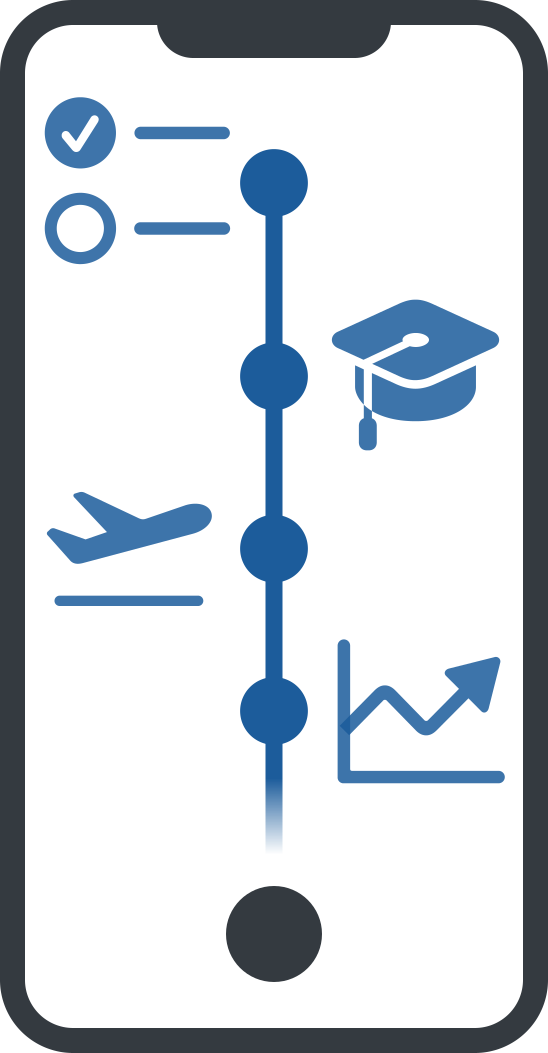
Get Your FREE Personalized Airline Pilot Training & Career Plan
We’ll text you a FREE personalized training and career plan — tailored to you, including:
- Projected Earnings
- Recommended Program
- Personalized Timeline
- Eligibility Checker
- Repayment Calculator
- Next Steps
Thank you! We just sent you a text with a link to your personalized airline pilot training and career path.
Help us customize your training and career path by answering just a few more questions.
Thank you! We've updated your personalized training and career path with the information you provided. View your Personalized Training and Career Path »
Want More Pilot Training & Career Info?
Get helpful emails with insights on what to expect, how to prepare, and what’s next on your path to the airlines
All set! We'll periodically send you information on ATP's programs, the career, and how you can become an airline pilot.