How Much Do Pilots Make in 2026? Commercial Pilot Salary Guide
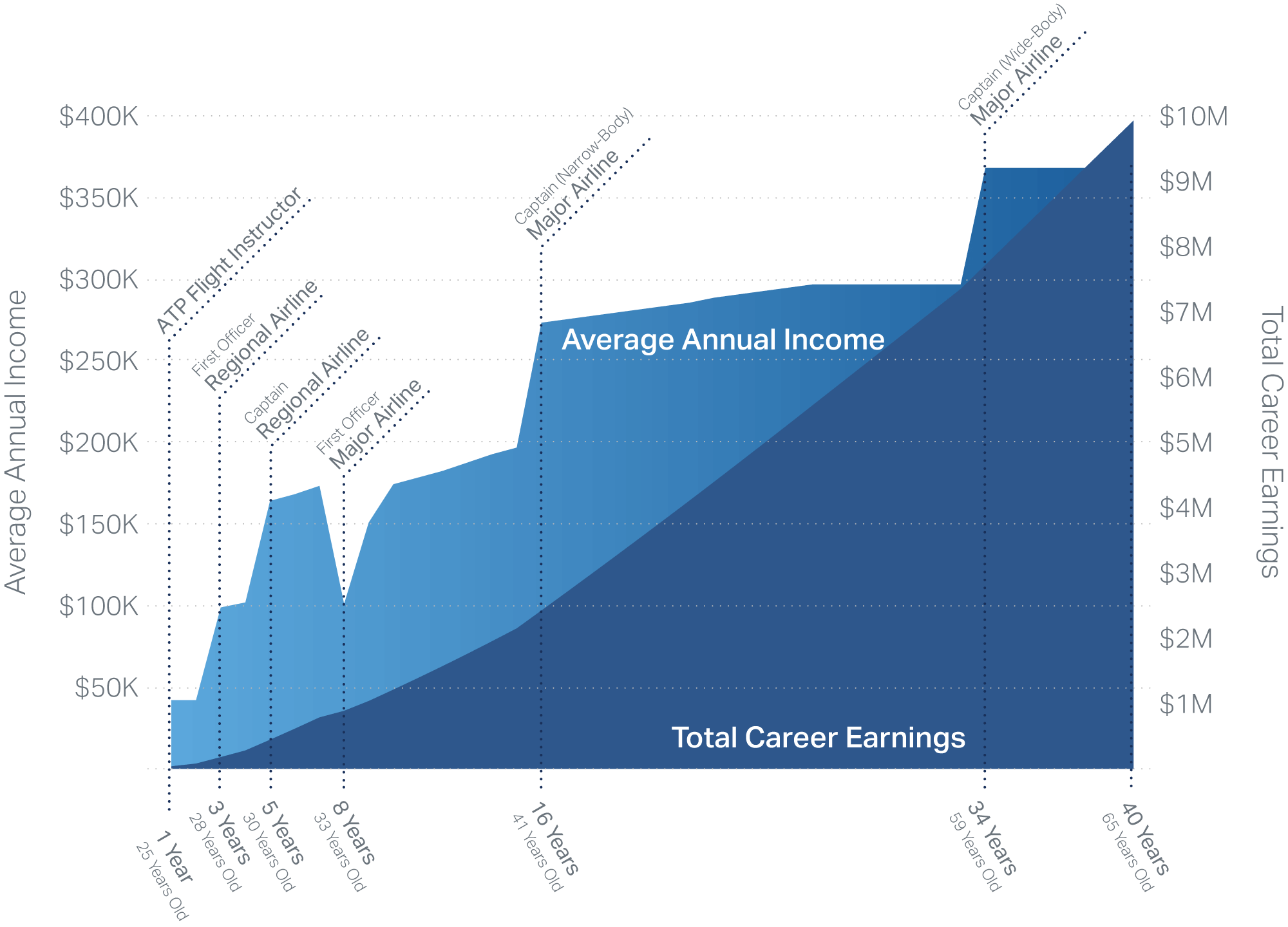
Pilot salary ranges from approximately $85,000 per year for first-year regional pilots to $450,000 per year for senior captains at major airlines. According to the U.S. Bureau of Labor Statistics, the median annual wage for airline pilots, copilots and flight engineers is $226,600. While commercial pilots earn around $122,670 annually. These amounts can vary depending on airline type, aircraft, experience, and job title.
Annual Pilot Salary Range
Salaries have continued to rise over recent years, reflecting strong demand for qualified pilots. Pay can range widely: a first-year regional first officer may earn between $70,000-$90,000, while a senior widebody captain at a major airline or cargo carrier can earn $350,000 or more. Compensation is often calculated using hourly pay multiplied by credit hours rather than a flat salary, so earnings can fluctuate based on flight hours, routes flown, and seniority.
Beyond base pay, pilots generally receive comprehensive benefits, including health, life, and disability insurance, as well as retirement plans that often exceed those available in other professions.
Annual Pilot Salary by Airline Type
Below is a breakdown of common salary ranges for different types of pilots in the U.S., from regional airlines to major carriers. Use these ranges to get a sense of what you could earn at various career stages.
| Airline Type | Annual Salary Range | |
|---|---|---|
|
Major Airline Pilot
Legacy & Major Carriers
|
$98,680 — $450,000 |
Major Airline Pay »
Hourly Pilot Pay » |
|
Regional Airline Pilot
Entry → Mid-Level Airlines
|
$85,000 — $217,530 |
First-Year Pay »
What is a Regional Airline? |
|
Cargo Airline Pilot
FedEx, UPS, DHL, and other cargo carriers
|
$90,000 — $350,000 |
Cargo Pilot Timeline »
Corporate & Cargo Career Tracks™ » |
Grab a FREE Pilot Career Guide »

See Your Projected Career Earnings
Get your FREE personalized airline pilot training and career path, plus discover:
- Projected Earnings
- Recommended Program
- Personalized Timeline
- Eligibility Checker
- Repayment Calculator
- Next Steps
Thank you! We just sent you a text with a link to your personalized airline pilot training and career path.
Help us customize your training and career path by answering just a few more questions.
Thank you! We've updated your personalized training and career path with the information you provided. View your Personalized Training and Career Path »
Want More Pilot Training & Career Info?
Get helpful emails with insights on what to expect, how to prepare, and what’s next on your path to the airlines
All set! We'll periodically send you information on ATP's programs, the career, and how you can become an airline pilot.
Median Annual Pilot Salary Trends
Airlines are Hiring in 2026! Catch up on the latest industry news for airline pilot hiring announcements »
Median annual wage trends for airline pilots, copilots, and flight engineers, as reported by the U.S. Bureau of Labor Statistics:
| Year | Median Annual Salary | Year-over-Year Change |
|---|---|---|
| 2024 | $226,600 | $7,460 (+3.4%) |
| 2023 | $219,140 | $7,350 (+3.4%) |
| 2022 | $211,790 | $9,610 (+4.5%) |
| 2021 | $202,180 | — |
This steady upward trend reflects increased pilot demand, airline expansion, and large-scale retirements. Median salary data provides a helpful benchmark, but actual pilot earnings can vary significantly over the course of a career.