Your Fixed Tuition Investment
$123,995
Investment BeginsFlight Training
Complete training for fixed tuition. This is the primary investment phase, with a defined cost and timeline.
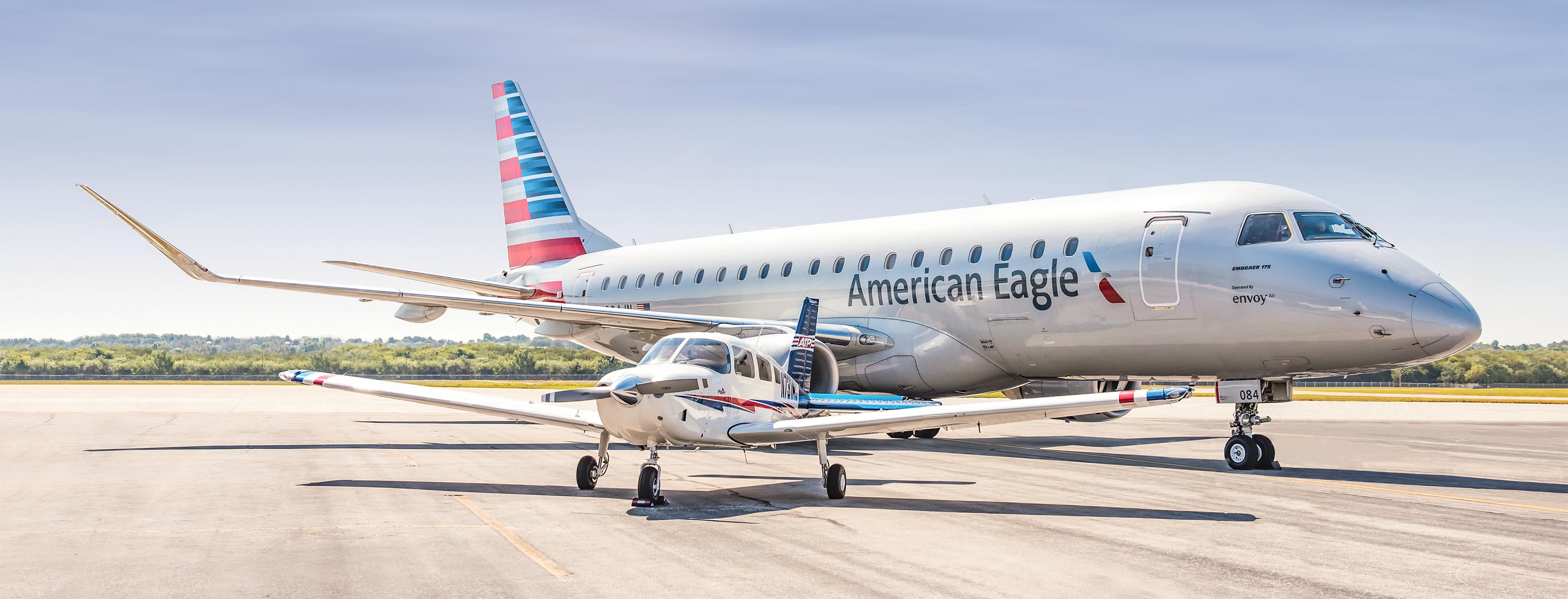
Becoming an airline pilot is a major financial decision—but at ATP, it's a highly leveraged and rational investment, not a gamble. With fixed pricing, accelerated training, and structured airline-backed Career Tracks™, students can clearly understand what they're paying for, when they'll earn, and how that investment pays off. This isn't just flight training—it's a career plan with measurable outcomes.
The ATP Advantage
Most flight schools charge by the hour, leaving total costs and timelines uncertain. ATP’s Airline Career Pilot Program is different.
Fixed, upfront pricing with no hourly variability, so you know your total investment before you start.
Accelerated training built for fast, structured progression with no open-ended timelines.
Airline partnerships and defined Career Tracks™ to regional and major airlines.
By Starting Point
See how illustrative instructor and airline earnings compare with fixed tuition, then follow the math from total earnings to what is left after tuition and your five-year ROI.
Illustrative Five-Year Earnings
Total Earnings$380K
Earnings After Tuition
$256K
Earnings After TuitionTuition
206% Five-Year ROIIllustrative Five-Year Earnings
Total Earnings$400K
Earnings After Tuition
$299K
Earnings After TuitionTuition
296% Five-Year ROIIllustrative Five-Year Earnings
Total Earnings$420K
Earnings After Tuition
$329K
Earnings After TuitionTuition
362% Five-Year ROIInstructor earnings are shown as $60K. Airline earnings begin with a $75K first-year salary and reflect illustrative progression during the remainder of the five-year period. Starting-point credit shortens training, leaving more of that period for paid flying.
Zero Experience starting point: tuition $123,995, approximately $380,000 in total earnings and $256,000 left after tuition, a 206% five-year return on investment.
Credit for Solo starting point: tuition $100,995, approximately $400,000 in total earnings and $299,000 left after tuition, a 296% five-year return on investment.
Credit for Private Pilot starting point: tuition $90,995, approximately $420,000 in total earnings and $329,000 left after tuition, a 362% five-year return on investment.
In this illustration, $60K in instructor earnings begins paying back tuition. Adding a $75K first-year airline salary brings cumulative career earnings to $135K—more than the fixed tuition at each starting point.
Fixed pricing makes that comparison measurable. Total earnings are what you earn before tuition is subtracted. Take tuition out and what remains is your earnings after tuition. ROI is that amount divided by what you paid.
Individual outcomes vary based on training progress, hiring conditions, salary progression, and financing terms. These examples are illustrations, not guarantees, and do not include financing costs, taxes, or living expenses.
Return on Investment
Your Fixed Tuition Investment
$123,995
Investment BeginsComplete training for fixed tuition. This is the primary investment phase, with a defined cost and timeline.
Instructor Earnings
$60K
48% of Tuition Earned BackEarn while gaining experience and building flight hours. In this illustration, $60K in instructor earnings recovers 48% of tuition.
Total Earned So Far
$135K
Break-Even on InvestmentInstructor earnings plus a $75K first-year airline salary bring total earnings to $135K, exceeding tuition at every starting point.
Total Earned in Five Years
$380K
206% Five-Year ROIEarnings grow to $150K–$300K+, with long-term career progression driving significant lifetime return well beyond initial training costs.
We’ll text you a FREE personalized training and career plan — tailored to you, including:
Thank you! We just sent you a text with a link to your personalized airline pilot training and career path.
Help us customize your training and career path by answering just a few more questions.
Thank you! We've updated your personalized training and career path with the information you provided. View your Personalized Training and Career Path »
Get helpful emails with insights on what to expect, how to prepare, and what’s next on your path to the airlines
All set! We'll periodically send you information on ATP's programs, the career, and how you can become an airline pilot.
Corporate and Cargo Career Tracks™
Some graduates may also pursue Corporate and Cargo Career Tracks™ after building flight experience as instructors, with typical annual earnings ranging from approximately $90K–$350K depending on operator and aircraft type.
Flight training requires an upfront investment, and most students finance their training. What makes ATP different is the ability to evaluate that investment clearly:
This structure allows students to approach training as a calculated career investment, rather than an uncertain expense.
Like any career investment, outcomes can vary. ATP’s structure is designed to help manage common risks:
Program commitment: With the ATP Advantage Guarantee, students starting the Airline Career Pilot Program enter the initial training phase with defined terms. If discontinued during the first stage of training, only flight time logged is charged at a discounted rate of $200 per hour, with no additional program or material costs. With the Flex Commercial Pilot Program, students may cancel at any time, for any reason, with no long-term commitment. Your ATP Essentials Pass will not auto-renew, and you will only be charged for flight, simulator, and ground instruction already used.
ATP’s Airline Career Pilot Program is a highly leveraged but structured investment. With fixed pricing, defined Career Tracks™, and early earning opportunities, students can clearly evaluate both the cost and the expected return.
Rather than an open-ended expense, ATP provides a transparent path from initial training to airline career—making the investment measurable, predictable, and aligned with long-term earnings potential.
When You Apply for a Loan and You're Qualified by Admissions

Whether you're starting from zero time or with your private pilot license, learn more about ATP's minimum admission requirements and prerequisites for the Airline Career Pilot Program.
What are the admission prerequisites and requirements? »Each day will be a combination of guided independent study, group study with fellow students, AATD simulator lessons, and flight lessons.
What is a typical flight training day like? »ATP's Airline Training Programs prepare students for airline pilot careers with an emphasis on nationwide flying experience in multi-engine aircraft.
How should I prepare for my class date? »Items to bring to training for ATP's Airline Career Pilot Program. This list pertains to students enrolled in ATP's accelerated flight training.
What should I bring to training? »Flight training is challenging, and some students may need extra support along the way. ATP provides structured progress tracking, targeted retraining, mentorship, and clear performance expectations to help students stay on track and succeed.
Learn How ATP Helps Students Succeed »ATP's Student Uniform Policy describes the professional appearances expected of students during flight training, ground school, and simulator sessions at the flight training center.
What is the uniform policy or dress code? »Total immersion flight training offers many advantages over slower-paced flight training options. This page summarizes the difference in training methods and which one best fits your learning style.
Why is Total Immersion Flight Training Best? »For those who need more flexibility and want to train part-time, ATP offers the Flex Commercial Pilot Program, where you control your schedule and how often you train.
ATP provides up-front, fixed-cost pricing in a way that differentiates us from most other flight schools and academies. With over 30 years of experience, ATP designs our flight training programs with enough flight time for the vast majority of students to be successful.
What is ATP's Fixed Cost Pricing Policy? »Description of ATP's Training and Refund Policy for students enrolled in the Airline Career Pilot Program.
What is ATP's attendance policy? »ATP requires Airline Career Pilot Program students to complete the ATP Orientation guided study course. Credit for Private students are also encouraged to review the Private Pilot guided study course.
While not required, consider attending ATP Elevate Ground sessions and completing one or more knowledge tests in advance.
What's Required Before My Start Date? »In an effort to maximize the efficiency of the Airline Career Pilot Program, you will likely be required to spend up to ten weeks away from your primary training center.
Learn More »Yes, having your single-engine and instrument instructor ratings open more flight instructor opportunities, including flying with ATP.
Learn More »The difference is simple: a partnership is formal and verified; a pathway is not.
Partnerships are formal programs backed by signed agreements between a flight school and an airline.
Pathways are general career progressions, not formal programs.
A partnership involves a documented agreement and active airline relationship. A pathway does not.
Learn More »Benefits can not be used to pay for the Airline Career Pilot Program, but may be used for reimbursement of FAA examiners' fees and knowledge tests.
Learn More »