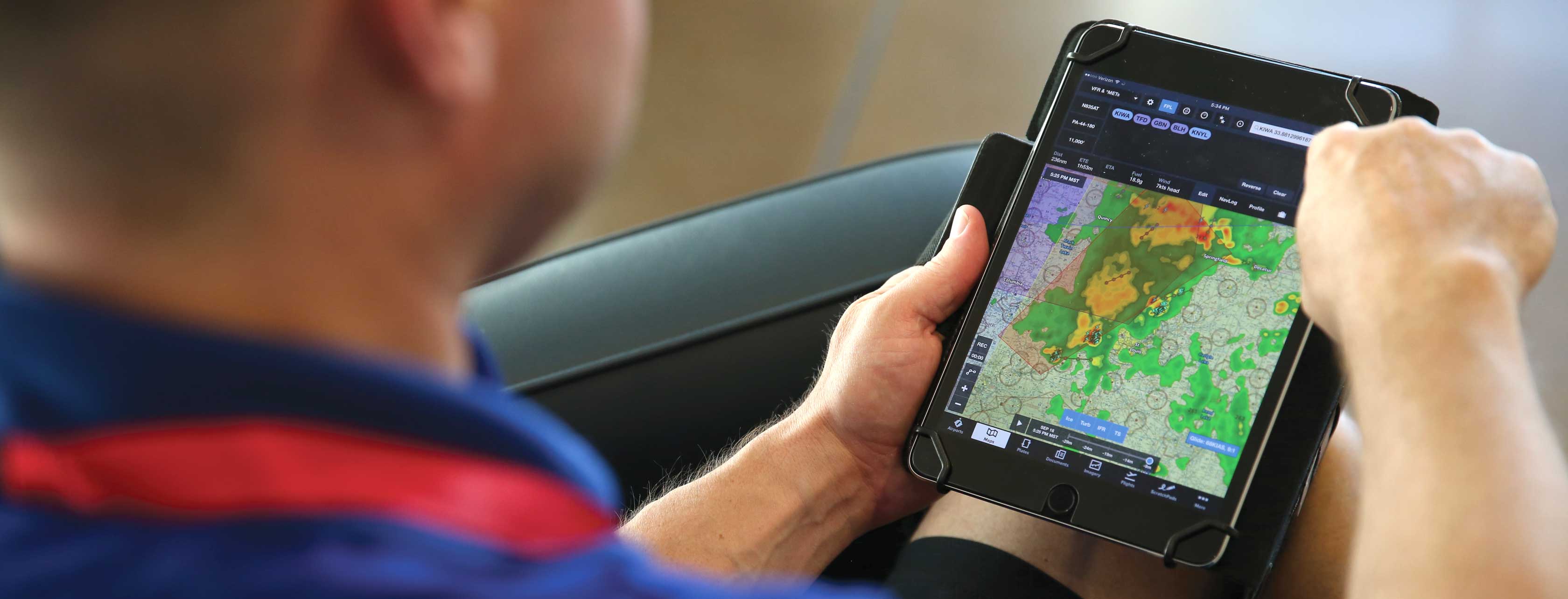
ForeFlight EFB on Apple iPad

Get Ahead: Taking One Or More FAA Knowledge Tests Before Starting ATP

Want to get a head start on your Airline Career Pilot Program? ATP encourages students to complete all of their FAA Airman Knowledge Tests before the program begins. These tests consist entirely of multiple-choice questions drawn from a predefined database, so with the right prep software you can get a good score even before you start one-on-one training with our flight instructors.

Airline Career Pilot Program students gain immediate access to ATP Elevate Ground School. Attend virtual, interactive, instructor-led ground school sessions to excel in your flight training.

Get Ahead with ATP Elevate »

Preparing for Knowledge Tests

Students should first complete the guided independent study required before their class date, then prepare and practice for airman knowledge tests using the recommended optional iPad apps.

Endorsements

The Private Pilot, Instrument, and Commercial Pilot knowledge tests each require an endorsement from a certificated flight or ground instructor confirming that you are ready to take the test. ATP’s flight instructors can give the endorsement based on practice tests from your test prep software. Take screenshots of at least three practice tests with scores of 90% or better, then call ATP Training Support at 904-595-7992. Instructors will review your practice test results, then email you an endorsement.

Knowledge Tests Requiring an Endorsement

  • Private Pilot Airplane (PAR)
  • Instrument Rating Airplane (IRA)
  • Commercial Pilot Airplane (CAX)
  • Fundamentals of Instructing (FOI)

Complete these three before beginning the Airline Career Pilot Program to get reimbursed for a 1-year subscription to ForeFlight Basic Plus.

Knowledge Tests Not Requiring an Endorsement

  • Flight Instructor Airplane (FIA)
  • Flight Instructor Instrument Airplane (FII)

These will need to be completed before beginning the flight instructor stage. The FII question bank is very similar to the IRA bank, so many students choose to take the FII immediately following the IRA even if it will be some time before their CFI training.

Optional Knowledge Tests

  • Ground Instructor (Advanced) (AGI)
  • Ground Instructor Instrument (IGI)

These tests are not included in the program because they are optional. They are available for those who are interested in becoming a Gold Seal CFI. Students can take both of these written tests at an ATP testing center for $150 per test.

Register in IACRA Before Scheduling

The first step in completing an FAA knowledge test starts with creating an IACRA account and obtaining an FAA Tracking Number (FTN).

  1. Visit iacra.faa.gov and click the ‘Register’ link in the upper right.
  2. Check the ‘Applicant’ checkbox and agree to the terms of service to continue.
  3. Fill in your personal information. If you do not have an airman certificate, leave the ‘Airman Certificate Number’ and ‘Date of Issuance’ fields blank.
  4. Submit the form by clicking ‘Register’ at the bottom. The system will generate a FTN number. Save this number and bring it with you when you take your knowledge tests.

Scheduling the Test

FAA knowledge testing centers are located across the country, including at most of ATP’s training centers. When you call ATP Training Support to get your endorsement for the test, we will help you locate a nearby testing center and schedule your test. Reminder: test results are valid for twenty-four months, so don't take them too early.

Incentives

Taking the knowledge tests before your class date removes a possible source of program delays, and allows you to focus on your flight and ground training. As an added incentive, if you complete the Private, Instrument, and Commercial tests prior to your class date, ATP will also reimburse you for a 1-year subscription to ForeFlight Essential at the ATP discounted rate.

Fly with ATP Flight School Take Your First Flight for Free

When You Apply for a Loan and You're Qualified by Admissions

Learn How »

Piper Archer flying above clouds

Related FAQs Airline Career Pilot Program

What are the admission prerequisites and requirements?
What is a typical flight training day like?
How should I prepare for my class date?
What should I bring to training?
What Happens if I Struggle During Training?
What is the uniform policy or dress code?
Why is Total Immersion Flight Training Best?
What if I Can't Train Full Time?
What is ATP's Fixed Cost Pricing Policy?
What is ATP's attendance policy?
What's Required Before My Start Date?
How Much Time Will I Spend Away From My Primary Training Center?
Does ATP offer custom flight training programs?
As an Airline Career Pilot Program graduate, can I instruct for ATP?
Can I use my GI Bill® benefits to pay for the Airline Career Pilot Program?
What are the admission prerequisites and requirements?

Whether you're starting from zero time or with your private pilot license, learn more about ATP's minimum admission requirements and prerequisites for the Airline Career Pilot Program.

What are the admission prerequisites and requirements? »
What is a typical flight training day like?

Airline Career Pilot Program students participate in flight training lessons on a full-time schedule, requiring a full-time commitment. Activities include guided independent study, flight lessons, Advanced Aviation Training Devices (AATD) simulator training, ATP Elevate Ground School, and ground lessons.

What is a typical flight training day like? »
How should I prepare for my class date?

ATP's Airline Training Programs prepare students for airline pilot careers with an emphasis on nationwide flying experience in multi-engine aircraft.

How should I prepare for my class date? »
What should I bring to training?

Items to bring to training for ATP's Airline Career Pilot Program. This list pertains to students enrolled in ATP's accelerated flight training.

What should I bring to training? »
What Happens if I Struggle During Training?

From your first lesson, progress is continuously monitored through structured lesson plans and performance tracking that students see in real time on their dashboard. If you fall behind or struggle with a skill, your instructor addresses it immediately through targeted ground and flight instruction, additional scenario-based training, and clear, actionable feedback tied to FAA Airman Certification Standards (ACS).

ATP’s remediation process includes focused retraining sessions, evaluation follow-ups to confirm proficiency, and guidance and mentorship from Managing Flight Instructors and Training Support—so you understand what needs improvement, the plan to fix it, and what success looks like. Students are expected to stay prepared and engaged; progress is measured against defined milestones. If progress cannot be achieved after structured support and retraining, training may be discontinued. While this outcome is rare, it reflects the same performance expectations required in an airline career.

Learn How ATP Helps Students Succeed »
What is the uniform policy or dress code?

ATP's Student Uniform Policy describes the professional appearances expected of students during flight training, ground school, and simulator sessions at the flight training center.

What is the uniform policy or dress code? »
Why is Total Immersion Flight Training Best?

Total immersion flight training offers many advantages over slower-paced flight training options. This page summarizes the difference in training methods and which one best fits your learning style.

Why is Total Immersion Flight Training Best? »
What if I Can't Train Full Time?

For those who need more flexibility and want to train part-time, ATP offers the Flex Commercial Pilot Program—a flexible airline pilot career solution where you schedule on your timeline with pay-as-you-train pricing (including options suited to students or working professionals).

What is ATP's Fixed Cost Pricing Policy?

ATP provides up-front, fixed-cost pricing and designs flight training programs with enough flight time for the vast majority of students to be successful. ATP never quotes prices based on unrealistic minimum flight time requirements.

If you require extra training beyond what’s included in your curriculum, ATP first tries to reallocate flight time from other parts of the syllabus before offering extra flight training at an additional cost. ATP guarantees the fixed cost quoted at the time of scheduling or first payment to reserve your class date, even if advertised prices increase later. Fixed-cost pricing does not include FAA knowledge tests, designated pilot examiner fees, or third-party iPad apps.

What is ATP's Fixed Cost Pricing Policy? »
What is ATP's attendance policy?

Description of ATP's Training and Refund Policy for students enrolled in the Airline Career Pilot Program.

What is ATP's attendance policy? »
What's Required Before My Start Date?

ATP requires Airline Career Pilot Program students to complete the ATP Orientation guided study course. Credit for Private students are also encouraged to review the Private Pilot guided study course.

While not required, consider attending ATP Elevate Ground sessions and completing one or more knowledge tests in advance.

What's Required Before My Start Date? »
How Much Time Will I Spend Away From My Primary Training Center?

In an effort to maximize the efficiency of the Airline Career Pilot Program, you will likely be required to spend up to ten weeks away from your primary training center.

Learn More »
As an Airline Career Pilot Program graduate, can I instruct for ATP?

Yes, having your single-engine and instrument instructor ratings open more flight instructor opportunities, including flying with ATP.

Learn More »
What is the Main Difference Between Partnership and Pathway?

The difference is simple: a partnership is formal and verified; a pathway is not.

Partnerships are formal programs backed by signed agreements between a flight school and an airline.

  • A defined, structured program exists.
  • A formal agreement or contract is in place.
  • The airline has vetted and approved the school.
  • The airline maintains an active, recognized relationship with the school.

Pathways are general career progressions, not formal programs.

  • No agreement with the airline.
  • No formal relationship or affiliation.
  • No structured or defined hiring program.
  • No verified airline endorsement of the school.

A partnership involves a documented agreement and active airline relationship. A pathway does not.

Learn More »
Can I use my GI Bill® benefits to pay for the Airline Career Pilot Program?

Benefits can not be used to pay for the Airline Career Pilot Program, but may be used for reimbursement of FAA examiners' fees and knowledge tests.

Learn More »