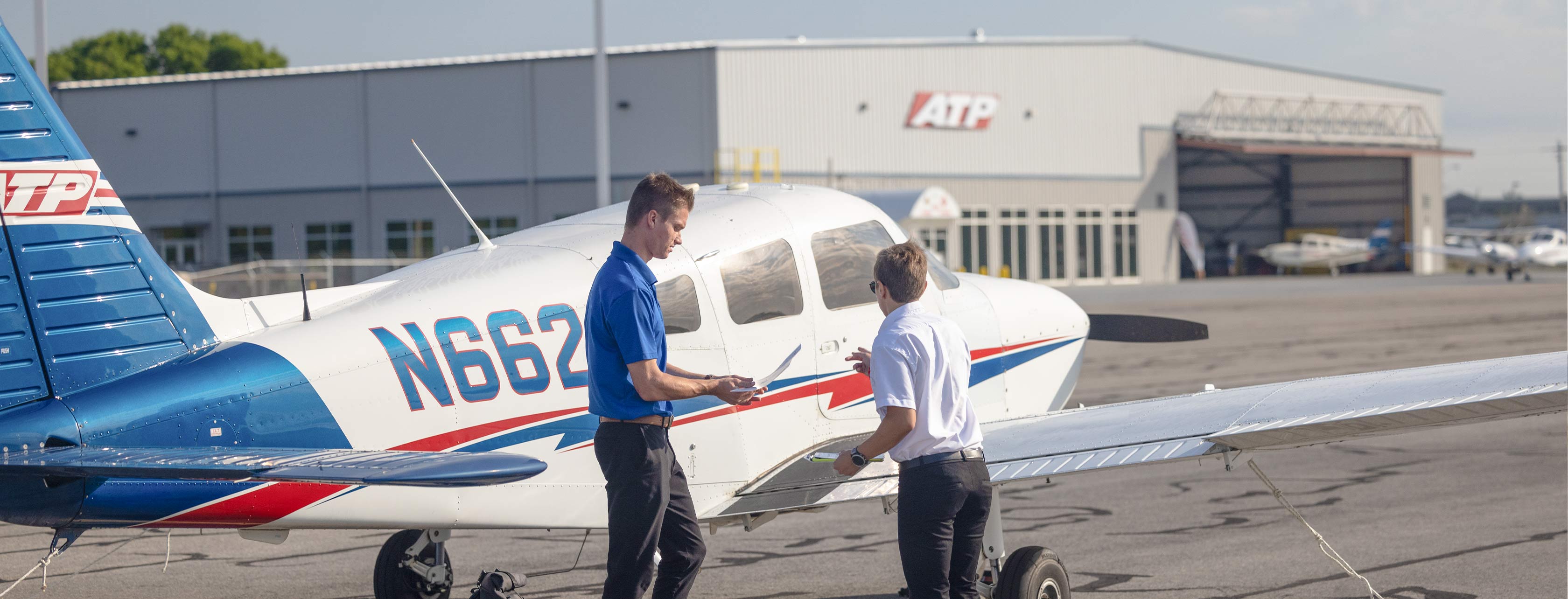
ATP Flight School student and instructor briefing beside a training aircraft

Part 141 vs Part 61 Flight Schools

Part 141 vs Part 61 is a comparison of two Federal Aviation Administration (FAA) frameworks for pilot training—not two different pilot licenses. Both paths lead to the same FAA pilot certificates and ratings. Neither framework is inherently better than the other, and the Part number alone should not decide where you train.

If you are comparing flight schools for an airline pilot career, use the frameworks to understand how a school organizes instruction. Then choose based on nationally awarded instructor quality, graduate airline outcomes, dedicated training support, financing clarity, and whether the school’s model aligns with airline goals—including airline recruiting relationships.

What is Part 61?

14 CFR Part 61 is the FAA regulation that prescribes the requirements for issuing pilot, flight instructor, and ground instructor certificates and ratings—including when those certificates are required and what privileges and limitations they carry.

Under Part 61, an authorized instructor (typically a certificated flight instructor) provides ground and flight training. The student must meet the aeronautical experience and training requirements listed for the certificate or rating sought—for example under 14 CFR §61.109 for a private pilot airplane certificate—then pass the required knowledge and practical tests.

Part 61 training is instructor-led and can be tailored to the student while still meeting the regulatory minimums for the certificate. Instructors have more latitude to adjust lesson order and add reinforcement where a student needs it. Those certificate standards live in Part 61 whether or not a school also holds a Part 141 certificate.

Primary source: 14 CFR Part 61.

What is Part 141?

14 CFR Part 141 is the FAA regulation that governs certificated pilot schools and provisional pilot schools. Upon certification, a Part 141 school is issued an Air Agency Certificate (FAA Form 8000-4) and trains students under FAA-approved course curricula.

“FAA-approved” in this context means the school and its courses meet Part 141 certification requirements for facilities, personnel, and curricula. It does not mean the FAA endorses Part 141 as better, preferred, or superior to Part 61. Both Part 61 and Part 141 are FAA regulations.

Unlike training conducted only under Part 61, Part 141 schools use a structured training program and syllabus. The FAA states that Part 141 schools may provide a greater variety of training aids and require dedicated training facilities, flight instructor oversight, and FAA-approved course curricula. Colleges and universities that offer aviation degrees often deliver pilot training under Part 141.

Part 141 schools designate a chief instructor for each approved course, use approved training course outlines, and conduct student stage checks and end-of-course tests as part of the structured curriculum. That approved syllabus leaves instructors less flexibility to tailor lesson sequence or reallocate training time to a student’s needs compared with Part 61 delivery. Some Part 141 schools may also hold examining authority for certain courses when they meet the additional requirements in Part 141 Subpart D.

Primary sources: 14 CFR Part 141; FAA Part 141 Pilot Schools.

Get Your Personalized Training & Career Plan

Your plan includes:

Recommended Program

Matched to your goals and timeline.

Estimated Costs

Estimated costs for your program.

Financing & Repayment

Explore estimated monthly payments.

Training Timeline

See how long training takes.

Career Earnings

Explore earnings by career stage.

Closest Location

Find the closest center near you.

Eligibility

See if you meet the requirements.

Getting Started

Your steps to get started.

Advances automatically. Pauses while you use it.

Build Your Plan

Question 1 of 6

What’s your training goal?

How Certification Works Under Each Part

Both frameworks end at the same place: an FAA airman certificate or rating. The training path and how the school organizes instruction differ.

Under Part 61

  • An authorized instructor provides required ground and flight training, with flexibility to tailor the sequence to the student.
  • The applicant logs aeronautical experience that meets the Part 61 minimums for the certificate or rating.
  • The applicant passes an FAA knowledge test (when required) and a practical test with an FAA examiner or designated examiner.
  • The school itself does not need a Part 141 Air Agency Certificate to train under Part 61.

Under Part 141

  • The student enrolls in an FAA-approved course with a defined training course outline and syllabus.
  • Training progresses through structured stages with stage checks and an end-of-course test.
  • A chief instructor (and, when designated, assistant chief and check instructors) oversees the approved course.
  • Course completion and required tests lead to the same FAA certificate or rating sought.

Graduates of either path hold the same type of FAA credential—for example a private pilot certificate, instrument rating, or commercial and instructor certificates on the airline path.

What is the Difference Between Part 61 and Part 141?

Topic Part 61 Part 141
What the Regulation Covers Certificate and rating standards for pilots and instructors Certification and operation of FAA pilot schools and their approved courses
School Certificate Not required for the school to train under Part 61 Requires a pilot school or provisional pilot school Air Agency Certificate
Curriculum Structure Instructor-led training meeting Part 61 experience rules FAA-approved syllabus, training course outline, stage checks, and end-of-course tests
Instructor Flexibility More latitude to tailor lesson order and add reinforcement for the student Approved course syllabus and stage checks limit how instructors may reallocate training within the course
School Oversight Model Instructor privileges and Part 61 certification standards Chief instructor, approved facilities and personnel, and regular FAA oversight of the certificated school’s Part 141 operations
Certificate Earned Same FAA certificates and ratings

Published Hour Minimums (Eligibility Floors)

These figures are regulatory eligibility floors—not a prediction of hours most students need for proficiency. Most people require more training than the published minimum under either framework.

Certificate / Rating Example Part 61 Floor Part 141 Approved-Course Floor
Private Pilot (Airplane) 40 total hours Often 35 total hours in an approved course
Instrument Rating Part 61 instrument aeronautical experience rules Approved-course outline with stage checks
Commercial Pilot 250 total hours under Part 61 Lower published floors may appear in some approved courses
What Airlines Hire On Certificates, ratings, flight experience, and professionalism—not which Part number was on the syllabus

Published Hour Minimums are Not the Training Plan

Both Part 61 and Part 141 publish flight-hour minimums that define the lowest eligibility floor for a certificate or approved course. They are not a realistic estimate of how long it takes most people to become proficient enough to pass a checkride and operate safely.

The FAA notes that fewer flight hours may be listed as eligible under an approved Part 141 course than under Part 61 for some certificates—and that most people require more training than the published minimum, so that difference can be insignificant in practice. Quoting a Part 141 minimum as a “program length” or “tuition hours” figure is misleading for that reason.

ATP quotes fixed-cost tuition based on realistic flight time requirements—not FAA Part 141 minimums alone—and designs programs with enough flight time for the vast majority of students to be successful. See how much it costs to become an airline pilot.

Hour and eligibility notes: FAA Pilot Schools Information; eCFR Part 61 and Part 141.

How Do Certification Outcomes Compare?

A private pilot certificate, instrument rating, commercial pilot certificate, or flight instructor certificate issued by the FAA is the same credential whether you trained under Part 61 or completed an approved Part 141 course. Airlines hire based on the certificates, ratings, flight experience, and professionalism you bring—not on which Part number appeared on your school’s training course outline.

Is Part 141 Better Than Part 61?

Neither is better. Part 61 and Part 141 are different paths to the same certificates. A common misconception is that “141 is better because it is FAA-approved.” Both frameworks are FAA regulations. Calling a Part 141 school “FAA-approved” means it holds an Air Agency Certificate with approved courses under Part 141—it does not mean the FAA ranks, endorses, or prefers Part 141 over Part 61. Part 61 training is still conducted under FAA rules for certificates, instructors, and testing.

Differences in structure, instructor flexibility, and published hour minimums can make one path advantageous in a specific context—for example, a college program built around Part 141 curricula, or a model that uses Part 61 flexibility when students need extra reinforcement. Those differences do not mean one Part produces a superior certificate.

Do not choose a flight school on Part 61 versus Part 141 alone. Pick on instructor quality, graduate results, training support, financing clarity, fleet and safety delivery, career support, and whether the school is built for an airline career.

What is Part 142?

Part 142 is the FAA framework for airline training centers that deliver advanced training and type ratings using full-motion simulators. In plain terms: it is where pilots complete jet-transition and airline-oriented simulator programs after the piston training pipeline—not the day-to-day private-through-commercial flying rules covered by Part 61 and Part 141.

At ATP Flight School, Part 142 training is provided through ATP JETS. ATP JETS provides the Airline Transport Pilot Certification Training Program (ATP CTP) and type rating programs on full-motion simulators for professional pilots and the nation’s airlines.

How Airline Pilots Train at ATP JETS

ATP JETS uses full-motion simulators and advanced avionics labs for airline-oriented advanced training, including CTP and type ratings that sit later on the airline career path.

Is ATP Flight School Part 61 or Part 141?

Both. Some people assume ATP Flight School trains only under Part 141, or only under Part 61. ATP Flight School’s Airline Career Pilot Program uses a proprietary blend of Part 61, Part 141, and airline-modeled training. ATP Flight School is an FAA-approved Part 141 flight school, and Part 142 training is provided through ATP JETS.

ATP Flight School’s blended model is built to maximize training efficiency and student proficiency on an airline-oriented path—so graduates progress with the structure and flexibility airline careers demand. Learn more about airline-oriented flight training.

How Should Airline-Career Seekers Choose a Flight School?

Start with your goal, then evaluate how each school delivers the path to that goal. Part 61 versus Part 141 is a training-framework detail—not the selection criteria.

Regulatory frameworks matter for how training is organized. They are not a substitute for choosing a school built around the career you want.

A Day in the Life of an ATP Student

Every training day at ATP includes guided independent study, ground school, simulator lessons, and flight lessons with nationally awarded instructors. See a day in the life of a student pilot and a typical flight training day.

Fly with ATP Flight School Take Your First Flight for Free

When You Apply for a Loan and You're Qualified by Admissions

Learn How »

Piper Archer flying above clouds

Frequently Asked Questions Part 141 vs Part 61

What is Part 61?

14 CFR Part 61 is the FAA regulation that sets the requirements for issuing pilot, flight instructor, and ground instructor certificates and ratings, including the privileges and limitations of those certificates. Under Part 61, a certificated flight instructor can provide training tailored to the student, and the applicant must meet the aeronautical experience minimums for the certificate or rating sought.

What is Part 141?

14 CFR Part 141 is the FAA regulation governing certificated pilot schools and provisional pilot schools. A Part 141 school is issued an Air Agency Certificate and trains students under FAA-approved structured courses and syllabi. “FAA-approved” here means the school and its courses meet Part 141 certification requirements—it does not mean the FAA endorses Part 141 as better or superior to Part 61.

What is the Difference Between Part 61 and Part 141?

Part 61 sets certificate and rating standards and allows instructor-led training that can be tailored to the student against those experience rules. Part 141 certifies the school itself and requires FAA-approved course outlines, stage checks, and a chief instructor for each approved course, which leaves instructors less flexibility to reallocate training within that syllabus. Published flight-hour figures under either part are regulatory eligibility minimums—most students need more hours for proficiency. Both paths lead to the same FAA certificates and ratings.

How Do Certification Outcomes Compare?

Private, instrument, commercial, flight instructor, and other certificates and ratings issued by the FAA are the same credentials whether the training was conducted under Part 61 or through an approved Part 141 course. The regulatory path differs; the airman certificate does not.

Is Part 141 Better Than Part 61?

Neither is better. Part 61 and Part 141 are different FAA frameworks for reaching the same certificates. “FAA-approved” for a Part 141 school means the school holds a Part 141 Air Agency Certificate with approved courses—not that the FAA ranks Part 141 above Part 61. Do not choose a flight school on Part 61 versus Part 141 alone.

What is Part 142?

Part 142 is the FAA framework for airline training centers that deliver advanced training and type ratings, typically using full-motion simulators. At ATP Flight School, Part 142 training is provided through ATP JETS, including the Airline Transport Pilot Certification Training Program (ATP CTP) and type rating programs.

Is ATP Flight School Part 61 or Part 141?

Both. ATP Flight School’s Airline Career Pilot Program uses a proprietary blend of Part 61, Part 141, and airline-modeled training. ATP Flight School is an FAA-approved Part 141 flight school, and Part 142 training is provided through ATP JETS. The blended model combines Part 141 structure with Part 61 flexibility to reallocate training time when students need additional reinforcement.

How Should Airline-Career Seekers Choose a Flight School?

Do not pick a school on Part 61 versus Part 141 alone. Evaluate nationally awarded instructor quality, graduate airline placements, dedicated training support, financing clarity, fleet and maintenance reliability, safety standards, career support, and airline recruiting relationships—and whether the school’s model matches an airline career goal rather than recreational flying.

Note: 14 CFR part 142 programs provided by ATP Jet Simulation, Inc.